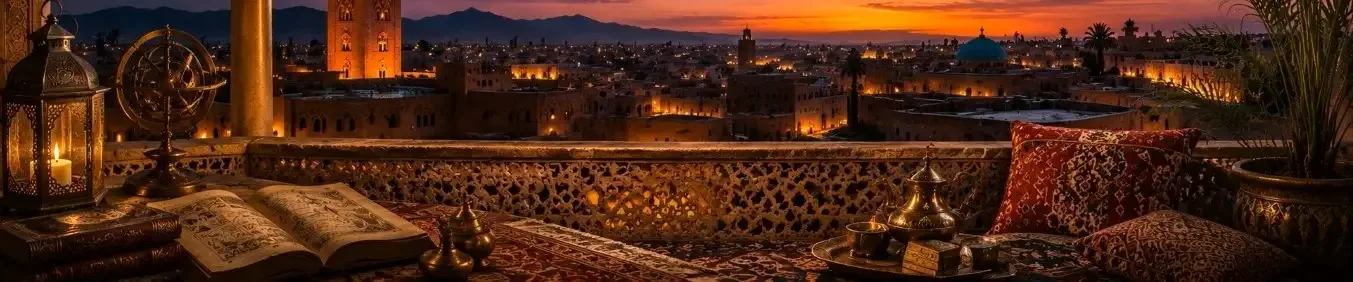
An arcanologist studies hidden, symbolic, esoteric, and mystical knowledge. In practical terms, an arcanologist researches ancient symbols, myths, dreams, ritual traditions, occult history, sacred texts, and spiritual meanings, while carefully separating cultural belief from verified history. The role is interpretive, reflective, and research-based, not a claim of supernatural certainty.
What Is an Arcanologist?
An arcanologist is someone who studies arcanology, a term commonly defined as the study of the esoteric, metaphysical, secret, and hidden. The word comes from “arcane,” meaning hidden or secret, which traces back to the Latin arcanus, meaning concealed, private, or secret. (etymonline.com)
In simple language, an arcanologist asks:
- What meanings are hidden inside symbols?
- Why do certain myths survive across cultures?
- How do dreams, omens, rituals, and sacred stories shape human life?
- What is the difference between spiritual interpretation and historical evidence?
An arcanologist does not need to claim magical power. The strongest form of arcanology is disciplined curiosity: the art of reading hidden meaning without pretending that every mystery has a final answer.

What Does an Arcanologist Actually Do?
An arcanologist studies symbols, myths, dreams, mystical traditions, and hidden knowledge systems to understand their spiritual, cultural, and historical meanings. They may compare old texts, interpret signs, explore folklore, research esoteric traditions, and explain how people use symbolic language to make sense of life.
Their work often includes five main activities:
- Researching ancient and modern esoteric traditions
- Interpreting symbols, dreams, and myths
- Studying occult history without sensationalism
- Comparing spiritual beliefs across cultures
- Helping readers reflect on meaning, mystery, and inner life
The University of Amsterdam describes Western esotericism as an umbrella field covering traditions such as Hermetic currents, astrology, alchemy, Kabbalah, theosophy, Rosicrucianism, spiritualism, New Age culture, and related forms of “occulture.” (Universiteit van Amsterdam)
The Main Areas an Arcanologist Studies
1. Symbols and Sacred Signs
Symbols are central to arcanology. A serpent, eye, moon, key, mirror, hand, or doorway can carry different meanings depending on culture, religion, history, and context.
An arcanologist might study:
- The evil eye as protection and fear of envy
- The key as a sign of access to hidden knowledge
- The moon as a symbol of cycles, intuition, and time
- The mirror as a symbol of truth, illusion, and self-knowledge
- The hand as a sign of blessing, power, or protection
Symbolically, this work asks what a sign means to the people who use it. Historically, it asks where the symbol appears and how its meaning changed.
2. Myths, Folklore, and Hidden Stories
Myths are not “false stories” in the simple sense. They are cultural vessels. They carry memory, fear, hope, moral teaching, and spiritual imagination.
An arcanologist may study stories of spirits, jinn, saints, ancestors, sacred places, magical objects, or dream journeys. In Moroccan, Arab, Amazigh, and Islamic cultural contexts, this requires special care. These traditions should not be reduced to exotic fantasy. They belong to living communities, religious histories, oral memory, and local identity.
A respectful arcanologist asks:
What does this story reveal about the values, fears, and sacred imagination of a culture?
3. Dreams and Inner Symbolism
Dreams have been interpreted in many religious, mystical, and psychological traditions. An arcanologist may explore dream symbols as spiritual or symbolic language, but should not present dream meanings as scientific certainty.
For example:
- A snake in a dream may symbolize danger, healing, temptation, wisdom, or transformation.
- Water may suggest emotion, purification, fear, memory, or spiritual passage.
- A house may represent the self, family, ancestry, or hidden rooms of the mind.
The key is context. A serious arcanologist does not say, “This dream definitely means one thing.” Instead, they ask what the image means in culture, personal experience, and spiritual tradition.
4. Esoteric and Occult History
The word “occult” often sounds dramatic, but historically it means hidden or secret. Britannica explains that occultism is associated with esoteric religious traditions, especially those emerging in 19th-century Europe, and that the word “occult” comes from Latin occultus, meaning hidden or secret. (Encyclopedia Britannica)
An arcanologist may research:
- Alchemy
- Astrology
- Hermeticism
- Kabbalah
- Divination traditions
- Mysticism
- Magical manuscripts
- Secret societies
- Folk healing traditions
- Ritual symbolism
However, research is not the same as endorsement. Studying alchemy does not mean claiming that alchemy works as literal chemistry. Studying astrology does not mean presenting it as science. Arcanology observes, interprets, and contextualizes.
5. Mysticism and Spiritual Experience
Mysticism and esotericism often overlap. Cambridge University Press describes mysticism and esotericism as closely related strands of Western tradition, while noting that scholars often study them separately. (Cambridge University Press & Assessment)
An arcanologist may explore mystical themes such as:
- Union with the divine
- Hidden wisdom
- Sacred silence
- Spiritual initiation
- Inner transformation
- The soul’s journey
- The invisible world
In spiritual writing, this area requires humility. Personal experiences can be meaningful, but they should not be forced onto everyone as universal truth.
Is Arcanology an Academic Field?
Arcanology itself is not usually treated as a standard university discipline under that exact name. Related subjects do exist in academic settings, especially under religious studies, anthropology, history of ideas, folklore studies, psychology of religion, and Western esotericism.
The University of Amsterdam notes that Western esotericism studies historical traditions that were once neglected in academic research but have recently received more scholarly attention. It also researches the relationship between esoteric ideas and mainstream intellectual and cultural history. (Universiteit van Amsterdam)
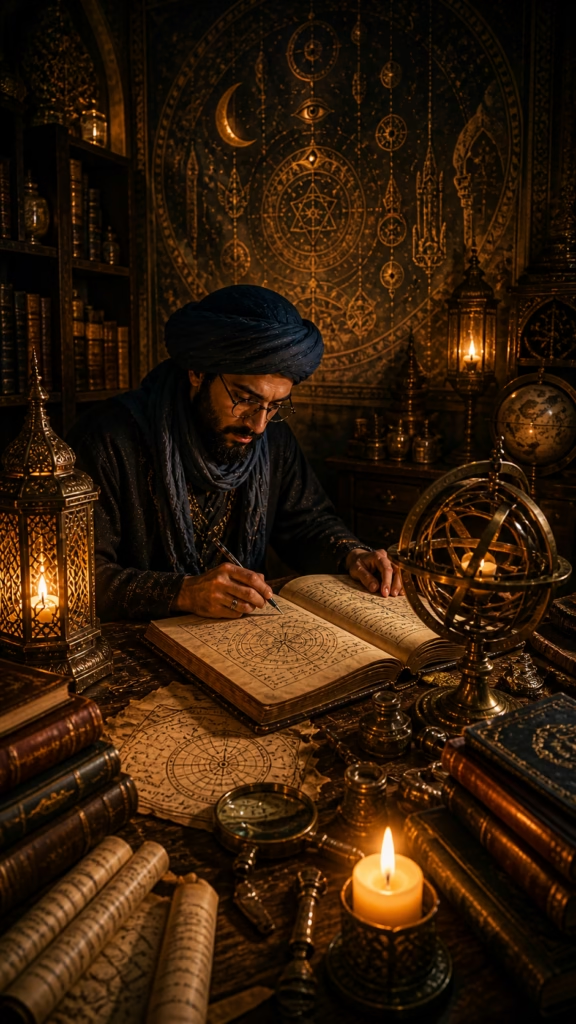
So, an arcanologist may be:
- A spiritual researcher
- A writer on symbolism
- A scholar of esotericism
- A folklore interpreter
- A mythology student
- A dream symbolism writer
- A practitioner of reflective spiritual study
The title “arcanologist” is flexible. Its seriousness depends on method, honesty, sources, and respect for culture.
What an Arcanologist Does Not Do
A trustworthy arcanologist does not:
- Claim every symbol has one fixed meaning
- Present belief as scientific proof
- Use fear to attract readers
- Exploit sacred traditions for entertainment
- Invent fake ancient origins
- Treat Moroccan, Arab, Amazigh, Islamic, or other traditions as fantasy material
- Promise supernatural certainty
This matters because hidden knowledge attracts imagination, but also misinformation. Oxford Academic notes that the meaning of “esoteric” depends strongly on social situation, secrecy, transmission, and function.
In other words, hidden knowledge is not just about mysterious content. It is also about who holds it, how it is shared, and why secrecy matters.
Arcanologist vs. Occultist vs. Mystic
These terms overlap, but they are not identical.
Arcanologist
An arcanologist studies hidden, symbolic, and esoteric knowledge. The focus is interpretation, research, comparison, and meaning.
Occultist
An occultist often studies or practices occult traditions. Historically, occultism includes esoteric traditions such as magic, alchemy, astrology, and spiritualism. (Encyclopedia Britannica)
Mystic
A mystic seeks direct spiritual experience or union with the divine. Mysticism focuses more on inner experience than symbolic research.
An arcanologist may study occultists and mystics without being either one.
The Daily Work of an Arcanologist
A modern arcanologist might spend the day doing tasks like these:
- Reading old texts, myths, and spiritual commentaries.
- Comparing symbols across cultures.
- Writing articles about dreams, omens, or sacred signs.
- Researching the history of esoteric traditions.
- Interviewing people about local beliefs or oral stories.
- Studying how symbols appear in art, ritual, and literature.
- Explaining spiritual meanings while noting uncertainty.
- Creating guides for readers who want reflection, not fear.
For Arcanologie.me, this means writing with both candlelight and footnotes: a mystical tone, but a careful method.
Why Arcanology Matters Today
Modern people still search for signs. They ask why a dream stayed with them, why a symbol keeps appearing, why an old story feels alive, or why certain rituals comfort the soul.
Arcanology matters because it gives language to mystery without destroying it.
It helps readers:
- Understand symbols with more depth
- Respect cultural traditions
- Avoid superstition based on fear
- Think critically about spiritual claims
- Explore meaning in dreams and stories
- Connect personal reflection with historical context
The purpose is not to make the world more irrational. The purpose is to make mystery more responsible.
How to Think Like an Arcanologist
To think like an arcanologist, follow this method:
- Notice the symbol
What image, dream, sign, word, or story is calling your attention? - Ask for context
Where did it appear? In a dream, ritual, book, family story, or cultural practice? - Separate fact from interpretation
What can be historically verified? What belongs to belief, folklore, or personal meaning? - Compare traditions carefully
Similar symbols may appear in different cultures, but they do not always mean the same thing. - Stay humble
The hidden world should be approached with patience, not certainty.
FAQ
What does an arcanologist study?
An arcanologist studies hidden knowledge, symbols, myths, dreams, esoteric traditions, folklore, mystical ideas, and spiritual meanings, while separating history, culture, belief, and personal interpretation.
Is an arcanologist the same as an occultist?
No. An occultist may practice occult systems, while an arcanologist mainly studies and interprets hidden or esoteric knowledge. The roles can overlap, but they are not identical.
Is arcanology a real academic subject?
Arcanology is not usually a formal university discipline under that exact name. However, related fields include religious studies, folklore, anthropology, history of ideas, and Western esotericism.
Can an arcanologist interpret dreams?
Yes, but responsibly. An arcanologist may interpret dreams symbolically or culturally, but should not claim that one dream image has a guaranteed universal meaning.
Does an arcanologist practice magic?
Not necessarily. Some may study magical traditions historically or symbolically, but studying magic does not mean practicing it or claiming supernatural powers.
Conclusion
An arcanologist studies the hidden architecture of meaning: symbols, dreams, myths, esoteric traditions, and spiritual stories. The best arcanologist is neither a sensationalist nor a skeptic who kills wonder. They are a careful reader of mystery, one who honors culture, checks sources, and leaves room for the unknown.
For your next reflection, choose one recurring symbol in your life, a dream image, animal, number, place, or object, and ask: What history does it carry, and what meaning does it awaken in me?
Sources
- Wiktionary, “Arcanologist.” (Wiktionary)
- Online Etymology Dictionary, “Arcane.” (etymonline.com)
- University of Amsterdam, “Western Esotericism.” (Universiteit van Amsterdam)
- Encyclopaedia Britannica, “Occultism.” (Encyclopedia Britannica)
- Cambridge University Press, The Cambridge Handbook of Western Mysticism and Esotericism. (Cambridge University Press & Assessment)
- Oxford Academic, “Esoteric, Mysteries, and Secrecy.”