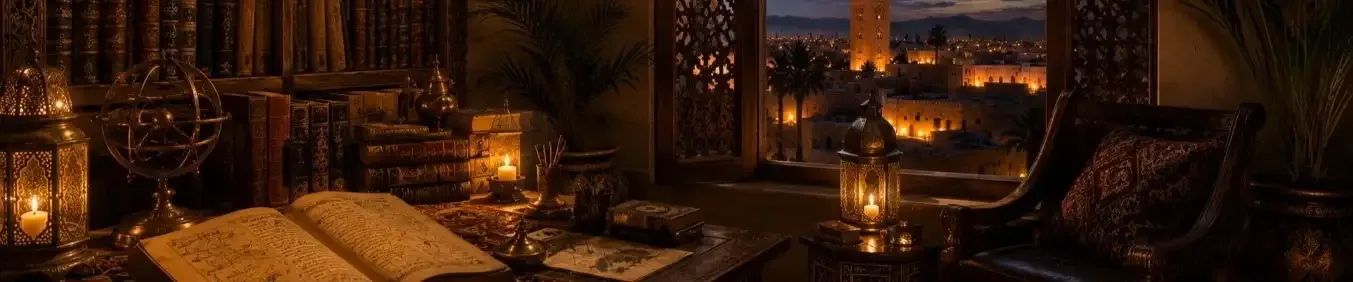
The Khmissa hand is a palm-shaped amulet, also called the hamsa or khamsa, traditionally used across North Africa and the Middle East as a sign of protection, blessing, and defense against the evil eye. In Moroccan and wider Maghrebi culture, it is both a spiritual symbol and a decorative cultural emblem. (British Museum)
What Is the Khmissa Hand?
The Khmissa hand is an open-hand symbol often worn as jewelry, hung in homes, or used in decorative art. Its name comes from khamsa, the Arabic word for “five,” referring to the five fingers of the hand.
Historically, hand-shaped amulets have appeared in North Africa and the Middle East as protective objects. The British Museum notes that such amulets are known as khamsas or “Hands of Fatima” and were used by Muslims and Jews to ward off the “eye of envy.” (British Museum)
Khmissa Hand Meaning and Evil Eye Protection
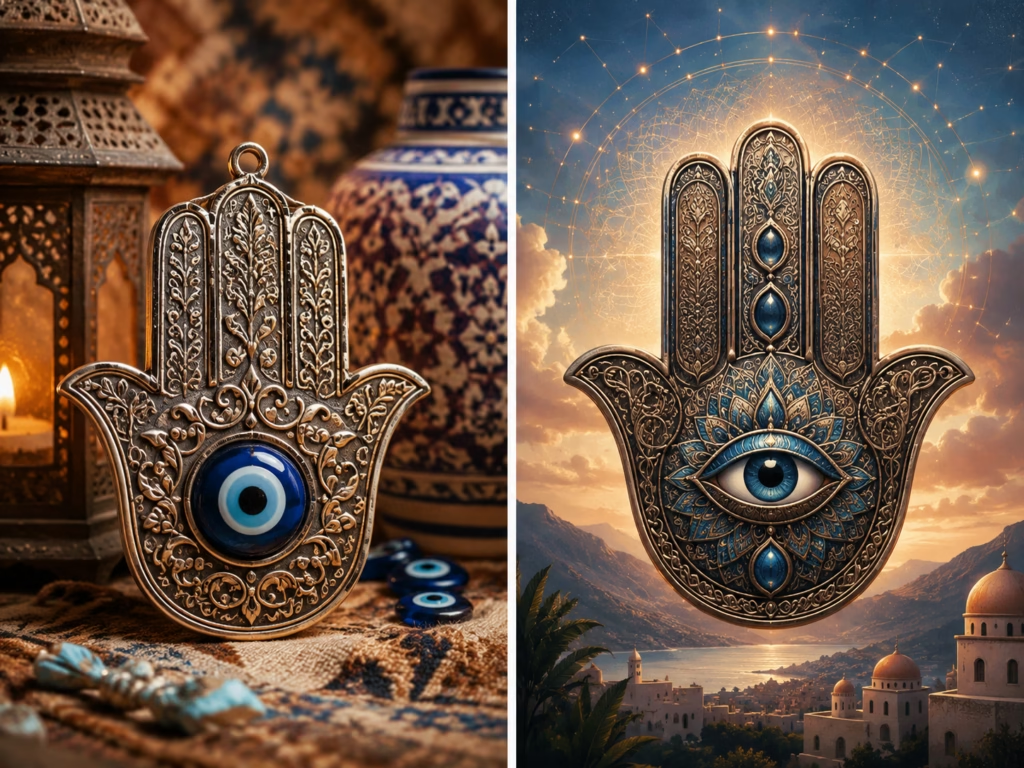
The main meaning of the Khmissa hand is protection from harmful envy, misfortune, and the evil eye.
In many traditions, the evil eye is understood as a harmful glance, often linked to jealousy or admiration that becomes spiritually dangerous. Britannica describes belief in the evil eye as ancient and widespread, appearing in Jewish, Islamic, Hindu, Buddhist, Greek, Roman, and folk traditions. (Encyclopedia Britannica)
Symbolically, the open hand acts like a spiritual barrier. It says: “stop harm before it enters.” When an eye appears in the palm, the symbol becomes even more focused on watching, reflecting, or neutralizing negative attention.
Is the Khmissa the Same as the Hamsa?
Yes, the Khmissa and hamsa are closely related names for the same palm-shaped protective symbol.
Common names include:
- Khmissa, often used in Moroccan or Maghrebi contexts
- Khamsa, from Arabic, meaning “five”
- Hamsa, a widely used English spelling
- Hand of Fatima, common in Islamic and North African references
- Hand of Miriam, used in some Jewish contexts
The symbol crosses religious and cultural borders, so its meaning depends on context. For some people, it is a faith-linked amulet. For others, it is a heritage symbol, a piece of jewelry, or a reminder of protection and blessing.
Historical and Cultural Context
Museum collections show that Khmissa-style amulets were made in places such as Morocco and the Levant. A British Museum hand-shaped pendant from Gaza, dated to the early 20th century, is described as an amulet against the evil eye or eye of envy. (British Museum)
The Minneapolis Institute of Art also identifies Moroccan hamsa and khamsa amulets as protective talismans, connecting the open hand motif with long-standing traditions of protection in North Africa. (ArtsMia Collections)
However, it is important to avoid reducing the Khmissa to one simple meaning. It belongs to a layered world of Moroccan, Amazigh, Arab, Jewish, Islamic, Mediterranean, and wider Middle Eastern symbolism.
Spiritual Interpretation for Modern Readers
For a U.S. audience, the Khmissa hand can be understood in three respectful ways:
- As cultural heritage: a symbol connected to Moroccan and North African identity.
- As spiritual protection: an amulet believed by many to guard against envy and harm.
- As personal symbolism: a reminder to protect your peace, energy, and boundaries.
Spiritual meanings are interpretations, not scientific facts. The Khmissa does not “prove” supernatural protection. Instead, it carries meaning through tradition, belief, memory, and symbolic use.
How to Use the Khmissa Hand Respectfully
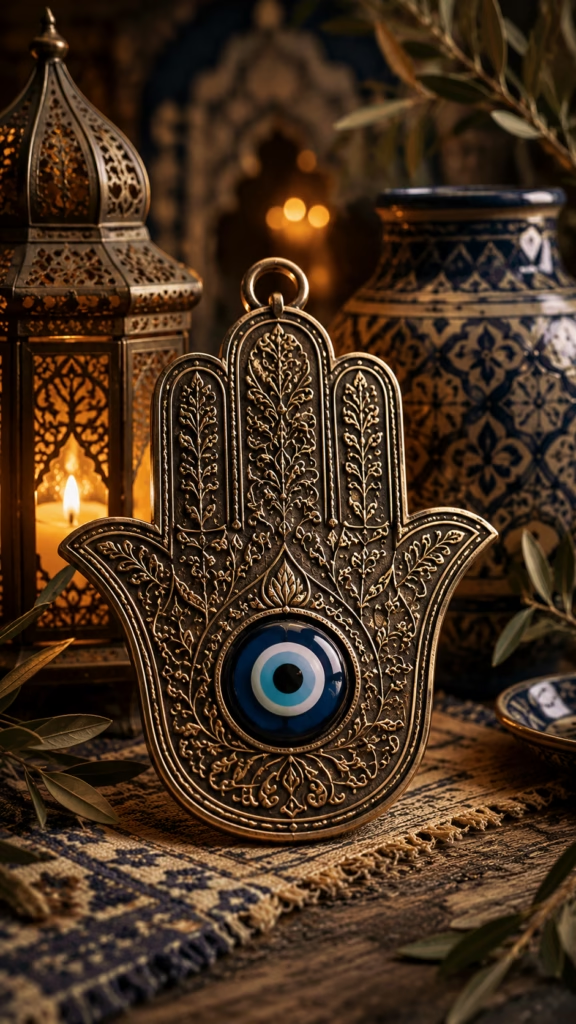
You can wear or display the Khmissa hand respectfully when you understand its roots.
Use it as:
- A pendant or bracelet with cultural awareness
- A home symbol for blessing and protection
- A meditation object for boundaries and inner peace
- A decorative motif with respect for Moroccan and Middle Eastern traditions
Avoid treating it as a random trend. Its beauty comes from its history, not only from its design.
FAQ
What does the Khmissa hand symbolize?
The Khmissa hand symbolizes protection, blessing, and defense against the evil eye. In Moroccan and North African traditions, it is often used as a spiritual and cultural shield.
Is the Khmissa hand Moroccan?
The Khmissa is strongly associated with Morocco and the Maghreb, but similar hamsa or khamsa symbols appear across North Africa, the Middle East, and Mediterranean cultures.
Is the Khmissa hand religious?
It can be religious, cultural, or decorative, depending on the user. Muslims, Jews, and others have used hand-shaped amulets, but many people today wear them as heritage symbols.
What is the evil eye?
The evil eye is a belief that envy or a harmful gaze can bring misfortune. Britannica describes it as an ancient and widespread belief across many cultures.
Can anyone wear a Khmissa hand?
Yes, but it should be worn with cultural respect. Learn its meaning, avoid stereotypes, and remember that it carries deep Moroccan, North African, and Middle Eastern associations.
Conclusion
The Khmissa hand is more than a beautiful palm-shaped charm. It is a layered symbol of protection, blessing, cultural memory, and spiritual defense against the evil eye. For modern readers, its power lies in understanding both its history and its symbolism with respect.
Sources
- British Museum, hand-shaped amulet pendant and curator notes on khamsas. (British Museum)
- Minneapolis Institute of Art, Moroccan hamsa amulet. (ArtsMia Collections)
- Minneapolis Institute of Art, Khamsa hand amulet by Ida ou Semlal Amazigh artist. (ArtsMia Collections)
- Encyclopaedia Britannica, evil eye belief and protection customs. (Encyclopedia Britannica)
- The Metropolitan Museum of Art, ancient amulets and protective objects. (The Metropolitan Museum of Art)
- Brill, The Hand of Fatima: The Khamsa in the Arab-Islamic World. (brill.com)