Hibiscus meaning centers on beauty, passion, renewal, hospitality, and delicate spiritual openness. Across cultures, this vivid tropical flower can symbolize love, feminine power, healing, good fortune, and the fleeting nature of life. Its meaning changes by color, place, and context, so hibiscus is best understood as both a cultural symbol and a personal spiritual sign.
What Is the Spiritual Meaning of Hibiscus?
The spiritual meaning of hibiscus is often linked to openness, emotional beauty, vitality, and transformation. Its wide petals seem to unfold toward light, which makes the flower a natural symbol of the heart opening to love, healing, and new experiences.
Historically and culturally, hibiscus is not one single symbol. It is a family of meanings. In some traditions, it is sacred. In others, it is decorative, medicinal, romantic, or national. The genus includes many species of showy flowering plants in the mallow family, Malvaceae, and hibiscus species are common in warm, subtropical, and tropical regions. (Wikipedia)
Spiritually, hibiscus can represent:
- Passion and sensuality
- Beauty and feminine energy
- Emotional healing
- Hospitality and welcome
- Renewal after difficulty
- The fragility of fame, youth, or earthly pleasure
- A reminder to live vividly, because beauty is brief
This article treats spiritual meanings as symbolic interpretations, not scientific facts.
Hibiscus Name Meaning and Origin
The word hibiscus comes through Latin from the Greek hibiskos, a word used for a mallow-like plant. Etymology sources trace the English word to the early eighteenth century, from Latin hibiscum or hibiscus, and ultimately Greek hibiskos. The deeper origin may be unknown, possibly Gaulish. (Etymonline)
This origin matters because hibiscus belongs to a wider botanical family connected with mallows. Symbolically, that family link supports the flower’s association with softness, moisture, beauty, and resilience.
In many places, hibiscus also has local names:
- Bunga Raya in Malaysia
- Bissap in Senegal and parts of West Africa
- Zobo in Nigeria
- Sobolo in Ghana
- Sorrel in the Caribbean
- Agua de Jamaica in Latin America
These names show how one flower can become many cultural stories.
Hibiscus Symbolism Around the World
Hibiscus in Hawaiian Culture: Welcome and Natural Beauty
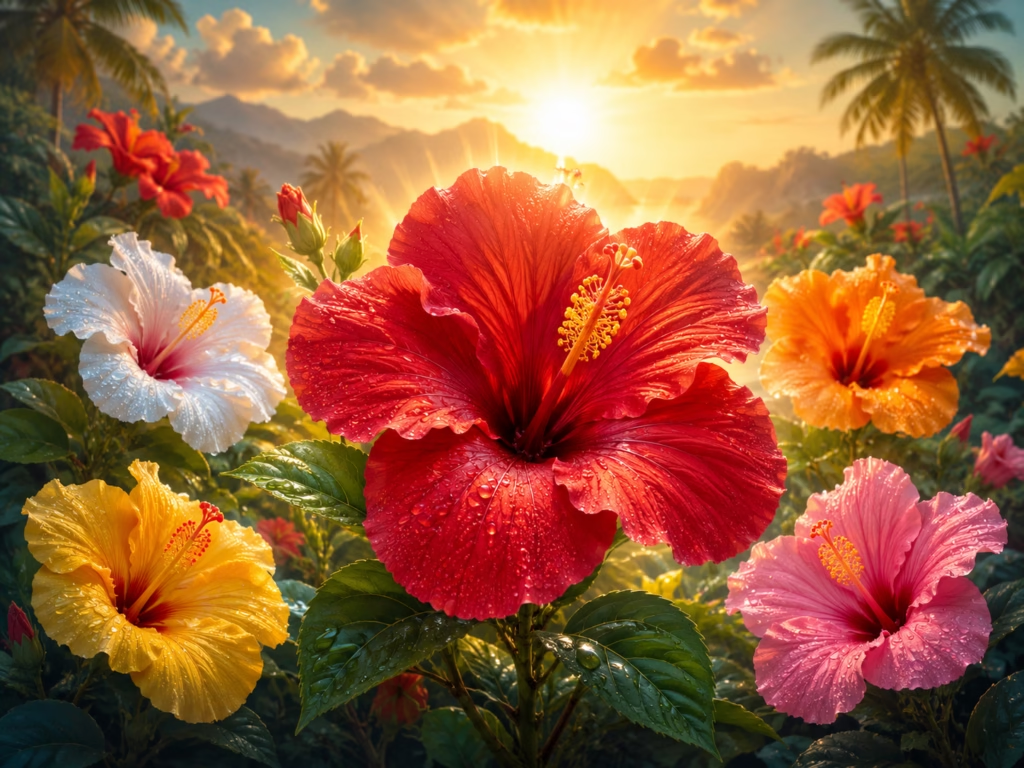
In Hawaii, hibiscus is strongly associated with island beauty, hospitality, and tropical identity. The yellow hibiscus, Hibiscus brackenridgei, also called maʻo hau hele, is the official state flower of Hawaii. It became the state flower in 1988 and is a federally listed endangered species. (State Symbols USA)
Culturally, hibiscus often appears in leis, prints, art, and tourism imagery. It can symbolize welcome, warmth, and the spirit of aloha. However, not every hibiscus image in Hawaiian design refers to the endangered native yellow hibiscus. Many decorative hibiscus flowers are cultivated varieties.
Hibiscus in Indian Spirituality: Kali, Power, and Devotion
In Hindu devotional contexts, the red hibiscus is closely associated with the goddess Kali, especially in Bengal and other regions where Kali worship is important. The flower’s red color is interpreted as intense energy, life force, sacrifice, and divine power. (Scientific American)
This does not mean hibiscus has one fixed Hindu meaning. In practice, flowers offered to deities depend on region, temple tradition, family custom, and devotional context. Still, red hibiscus is widely recognized as a flower of fierce feminine power, transformation, and devotion.
Hibiscus in West Africa and the African Diaspora: Bissap, Joy, and Gathering
In West Africa, hibiscus is deeply tied to food, hospitality, and communal life. Drinks made from Hibiscus sabdariffa, also called roselle, are known as bissap in Senegal, zobo in Nigeria, and sobolo in Ghana. These beverages are often served cold, sweetened, and shared during gatherings. (Wikipedia)
Across the African diaspora, hibiscus drinks also appear as sorrel in the Caribbean and agua de Jamaica in Latin America. Modern food historians often connect these drinks to African botanical memory, resilience, and celebration. (Serious Eats)
Symbolically, hibiscus here becomes more than a flower. It becomes a red thread between ancestry, celebration, hospitality, and survival.
Hibiscus in Malaysia: National Unity and Pride
In Malaysia, hibiscus is the national flower. The Malaysian government’s diplomatic sources note that Bunga Raya, meaning “great flower” or “celebratory flower,” was declared the national flower on July 28, 1960. (Kementerian Luar Negeri)
Its five petals are often interpreted in relation to national principles and unity. In this context, hibiscus symbolizes identity, pride, and shared belonging.
Hibiscus in Victorian Flower Language: Delicate Beauty
In the Victorian language of flowers, hibiscus is commonly associated with delicate beauty. Flower-language references list hibiscus with this meaning, which fits the flower’s short-lived bloom and graceful appearance. (Almanac)
In this setting, giving hibiscus could be read as a compliment: “Your beauty is rare, refined, and tender.”
Hibiscus Color Meanings
Red Hibiscus Meaning: Passion, Love, and Power
Red hibiscus symbolizes passion, romantic love, courage, and intense life force. In spiritual readings, it may also represent awakening desire, strong emotion, and sacred feminine power.
In Hindu contexts connected to Kali, red hibiscus can carry devotional and transformative meaning. In modern symbolism, it is often chosen for romance, attraction, and bold self-expression.
White Hibiscus Meaning: Purity, Peace, and Renewal
White hibiscus suggests purity, sincerity, spiritual peace, and new beginnings. It can be used symbolically for weddings, cleansing rituals, meditation spaces, or moments of emotional reset.
Spiritually, white hibiscus may invite simplicity: release what is heavy, return to clarity, and begin again.
Yellow Hibiscus Meaning: Joy, Sunlight, and Good Fortune
Yellow hibiscus represents happiness, optimism, friendship, and solar energy. Because Hawaii’s official flower is a yellow hibiscus species, this color can also evoke island identity, rare beauty, and natural heritage. (State Symbols USA)
As a gift, yellow hibiscus feels bright and encouraging. It says, “May joy return to you.”
Pink Hibiscus Meaning: Femininity, Affection, and Soft Love
Pink hibiscus is often linked with tenderness, beauty, affection, and emotional warmth. It can symbolize admiration without the fiery intensity of red.
Spiritually, pink hibiscus may represent heart healing, self-love, and gentle confidence.
Orange Hibiscus Meaning: Creativity, Vitality, and Movement
Orange hibiscus suggests creativity, enthusiasm, vitality, and sensual aliveness. It is a flower of movement and expression.
In symbolic chakra language, orange is often associated with creativity and pleasure, though this is a modern spiritual interpretation rather than a botanical fact.
Multicolored Hibiscus Meaning: Diversity and Radiance
A multicolored hibiscus can represent diversity, inclusiveness, and the full spectrum of human emotion. It reminds us that beauty is not uniform.
Spiritually, it can symbolize integration: passion, peace, joy, softness, and courage living together in one soul.
Hibiscus in Dreams: Spiritual Interpretation
Dreaming of hibiscus may suggest emotional opening, beauty, love, or renewal. Because dream interpretation is personal, the meaning depends on the dream’s color, mood, and your own associations.
Common symbolic readings include:
- A blooming hibiscus: new love, growth, or confidence.
- A red hibiscus: passion, desire, courage, or strong emotion.
- A white hibiscus: healing, peace, or a fresh start.
- A fading hibiscus: the need to appreciate a brief opportunity.
- Receiving hibiscus: admiration, affection, or a message from the heart.
Dream symbolism should not be treated as prediction. It is better read as reflective language from the inner self.
Hibiscus Tattoo Meaning
A hibiscus tattoo often represents beauty, freedom, femininity, passion, tropical identity, or personal transformation. Its meaning depends on design, color, and placement.
A red hibiscus tattoo may express love and courage. A white hibiscus may suggest spiritual renewal. A Hawaiian-style hibiscus may honor island heritage or a connection to the Pacific. A hibiscus with waves, birds, or the sun can add themes of travel, liberation, and vitality.
Before using hibiscus as a cultural tattoo, especially with Hawaiian or sacred Indian motifs, it is respectful to understand the tradition behind the image.
Hibiscus and Healing: What Science Says
Hibiscus has a long history in herbal drinks, especially through Hibiscus sabdariffa. Modern research has studied hibiscus for cardiovascular effects, particularly blood pressure. A 2022 systematic review and meta-analysis found that hibiscus may help reduce blood pressure, although study quality, dosage, and individual health conditions matter. (PMC)
This is a health topic, not only a spiritual one. Hibiscus tea should not replace medical care. People taking blood pressure medicine, diabetes medicine, diuretics, or other prescriptions should ask a qualified clinician before using hibiscus regularly.
Symbolically, this healing association gives hibiscus a gentle spiritual meaning: restoration, balance, and care for the body.
Hibiscus in Gifts: What Does It Mean to Give One?
Giving hibiscus can mean admiration, affection, welcome, encouragement, or romantic interest. The exact message depends on color and occasion.
For a birthday, hibiscus can symbolize joy and blooming into a new year. For a wedding, it can represent passion and beauty. For a friend, yellow hibiscus can express warmth and happiness. For a lover, red hibiscus suggests desire and heartfelt attraction.
Because hibiscus blooms are often short-lived, the gift can also carry a quiet message: cherish beauty while it is here.
Hibiscus in Fashion and Art
Hibiscus is a common design in tropical fashion, textiles, beachwear, jewelry, and home decor. Its visual meaning is immediate: warmth, color, sensuality, and escape.
In art, hibiscus often stands for natural abundance and feminine grace. In modern global culture, it can also signal summer, vacation, freedom, and a romantic connection to tropical landscapes.
However, when hibiscus appears in sacred or national contexts, its meaning becomes deeper than decoration. It may carry identity, devotion, or heritage.
Featured Snippet Answer: Hibiscus Meaning in One Paragraph
Hibiscus symbolizes beauty, passion, renewal, hospitality, and spiritual openness. Red hibiscus often means love and power, white means purity, yellow means joy, pink means affection, and orange means vitality. Across cultures, hibiscus appears in Hindu worship, Hawaiian identity, West African drinks, Malaysian national symbolism, and Victorian flower language.
FAQ
What does hibiscus symbolize spiritually?
Hibiscus spiritually symbolizes beauty, passion, emotional openness, healing, and renewal. It can also represent feminine energy, hospitality, and the fleeting nature of life.
Is hibiscus a lucky flower?
In some cultures, hibiscus is linked with good fortune, prosperity, and joyful welcome. Its lucky meaning depends on local tradition, color, and how the flower is used.
What does red hibiscus mean?
Red hibiscus usually means passion, love, desire, courage, and powerful feminine energy. In some Hindu contexts, it is associated with devotion to goddess Kali.
What does hibiscus mean in a dream?
A hibiscus dream may symbolize emotional growth, love, healing, or a new opportunity. The meaning depends on the flower’s color, condition, and your feelings in the dream.
Is hibiscus used for healing?
Hibiscus tea has been studied for blood pressure support, especially Hibiscus sabdariffa. It may help some people, but it should not replace medical advice or prescribed treatment.
Conclusion
Hibiscus meaning is rich because the flower lives in many worlds at once. It is botanical, medicinal, romantic, national, spiritual, and artistic. For a global reader, its strongest message is this: beauty can be powerful, healing can be colorful, and the heart can open even after difficulty.
The next time you see hibiscus, notice its color. That color may guide the message: passion, peace, joy, tenderness, vitality, or radiant diversity.
Sources
- Uploaded French source article on hibiscus symbolism.
- Etymonline, hibiscus word origin. (Etymonline)
- Hawaii state flower information and conservation notes. (State Symbols USA)
- Scientific American, hibiscus and Kali cultural symbolism. (Scientific American)
- Old Farmer’s Almanac, language of flowers. (Almanac)
- Malaysia official sources on Bunga Raya as national flower. (Kementerian Luar Negeri)
- Hibiscus tea, bissap, and African diaspora drink traditions. (Wikipedia)
- Systematic review on hibiscus and blood pressure. (PMC)