
Common omens are events, animals, dreams, or repeated signs that people interpret as messages about change, warning, blessing, or protection. Historically, omens were understood through culture, religion, folklore, and intuition, not scientific certainty. Their meanings depend on context, belief, location, and personal experience.
What Is an Omen?
An omen is a sign believed to point toward a future event, either fortunate or difficult. Britannica defines omens as observed phenomena interpreted as signs of good or bad fortune, often including lightning, clouds, birds, animals, or unusual events. (Encyclopedia Britannica)
In spiritual traditions, omens are not always treated as fixed predictions. They often work as symbolic invitations to pause, reflect, pray, protect oneself, or reconsider a decision.
Common Omens and Their Meanings
1. Birds Crossing Your Path
Birds are among the oldest omen symbols. In ancient Roman augury, people observed birds and animal behavior to understand whether a course of action had divine approval. (Encyclopedia Britannica)
Symbolically, birds may suggest:
- A message arriving soon
- Spiritual guidance
- Freedom or movement
- A need to observe before acting
In Moroccan and Arab cultural settings, birds may also be read through personal family traditions. A bird entering a home, for example, may be seen by some as a sign of news, guests, or emotional change.
2. Repeated Numbers
Repeated numbers, such as 111, 222, or 777, are modern spiritual omens more than ancient universal symbols. Many people interpret them as signs of alignment, timing, or spiritual attention.
Symbolically:
- 111 may suggest new beginnings
- 222 may suggest balance or patience
- 333 may suggest protection or guidance
- 777 may suggest spiritual reflection
This is a modern interpretation, not a verified rule.
3. The Evil Eye
In Morocco and wider North African culture, the evil eye is one of the most recognized protective and warning symbols. It is commonly linked to envy, harmful attention, and the need for spiritual protection. Moroccan popular belief often connects the evil eye with misfortune affecting health, family, work, or luck. (Morocco World News)
The khamsa, also called hamsa, is widely used across North Africa and the Middle East as a protective symbol against the evil eye. (Wikipédia)
Cultural interpretation:
- Sudden praise without blessing may require protection
- A broken charm may be seen as absorbed negativity
- Protective words, prayer, and humility are often preferred responses
4. Dreams as Omens
Dreams are often treated as spiritual signs in many traditions, but Islamic teachings make an important distinction. Sahih Muslim describes dreams as three types: glad tidings from Allah, distressing dreams from Satan, and dreams from one’s own thoughts. (sunnah.com)
This means not every dream should be treated as an omen.
In Islamic and Moroccan contexts, a dream may be approached through:
- Prayer
- Careful reflection
- Consultation with someone wise
- Avoiding fear-based interpretation
5. A Black Cat Crossing Your Path
The black cat is often seen as a bad omen in European folklore, but this meaning is not universal. In some cultures, cats symbolize protection, mystery, femininity, or hidden knowledge.
Symbolically, a black cat may suggest:
- Pay attention to intuition
- Do not rush into judgment
- Hidden matters may soon appear
There is no verified universal meaning for this omen.
6. Sudden Candle Flame Changes
In spiritual practice, a candle flame that grows, flickers, or goes out is often interpreted as a sign of energy, resistance, presence, or emotional atmosphere.
Symbolic meanings may include:
- A strong flame: focus or spiritual intensity
- A weak flame: delay, doubt, or low energy
- A flame going out: pause, protection, or interruption
However, physical causes matter too. Air movement, wick quality, and wax condition often explain candle behavior.
7. Hearing Your Name When No One Called
Some people interpret hearing their name as a spirit sign, ancestral message, or intuitive alert. In a grounded approach, this experience should first be considered naturally: fatigue, stress, memory, sound confusion, or expectation can shape perception.
Symbolically, it may mean:
- A need to pay attention
- Emotional sensitivity
- A call toward prayer or reflection
If it happens often or causes distress, practical care should come before spiritual interpretation.
8. Repeated Animal Encounters
Animals often carry symbolic meaning because they appear at emotionally charged moments. Ancient omen systems frequently included animal movement, bird flight, and natural signs. (Encyclopedia Britannica)
Common symbolic meanings:
- Owl: wisdom, secrecy, endings
- Snake: transformation, danger, healing
- Butterfly: change, renewal, soul symbolism
- Cat: intuition, mystery, independence
- Dog: loyalty, protection, warning
In Moroccan folklore, animal signs may vary by region, family tradition, and rural or urban context.
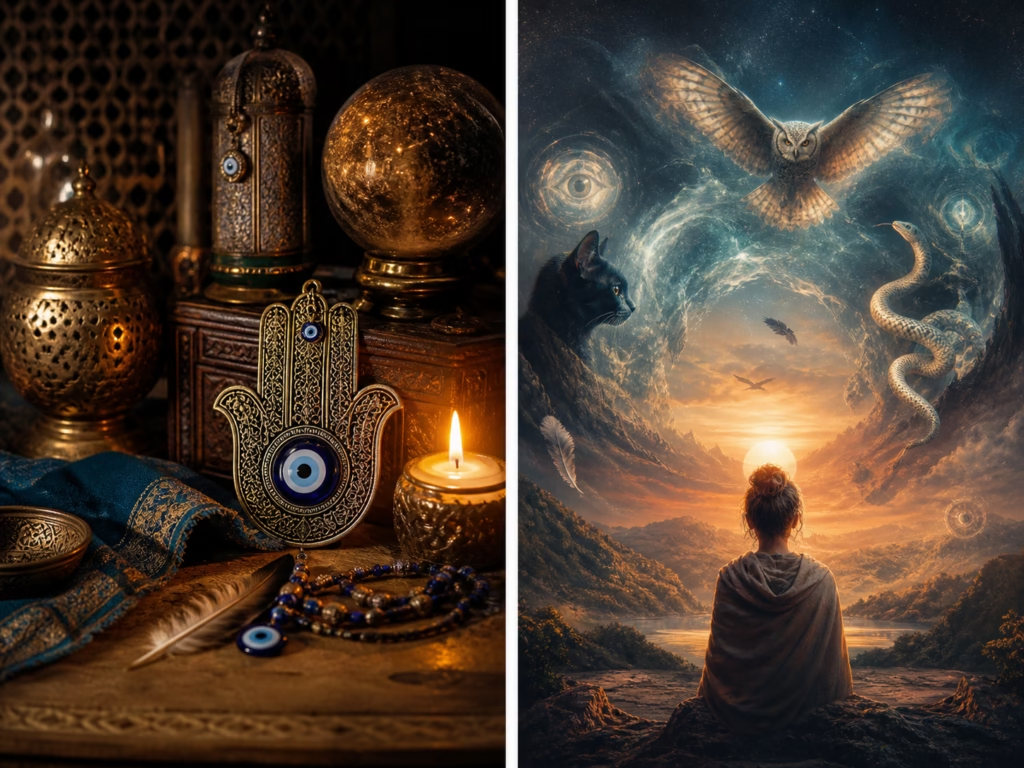
Common Omens in Moroccan and Arab Spiritual Culture
Localized omen interpretation in Morocco often blends Arab, Amazigh, Islamic, and folk traditions. Some people may speak of the evil eye, baraka, jinn, dreams, saintly blessing, or protective symbols.
Britannica describes jinn as beings in Arabic mythology and Islam, understood as unseen creatures capable of moral choice. (Encyclopedia Britannica)
Important distinctions:
- Islamic belief: dreams, jinn, prayer, divine protection
- Moroccan folklore: evil eye, khamsa, baraka, household signs
- Symbolic reading: animals, numbers, repeated coincidences
- Verified fact: natural explanations, psychology, environment
A respectful interpretation never turns fear into certainty. A sign may invite reflection, but it should not replace reason, prayer, medical care, or wise advice.
How to Interpret Omens Safely
Use this simple method:
- Observe the sign clearly. What happened, and when?
- Check natural causes first. Weather, stress, animals, health, and coincidence matter.
- Consider cultural meaning. Ask how your family, faith, or region understands the sign.
- Notice your emotional response. Fear, peace, pressure, or clarity can shape meaning.
- Avoid extreme conclusions. An omen is not proof of doom.
- Respond with grounding. Pray, reflect, journal, cleanse your space, or seek advice.
Are Omens Always Real Signs?
Omens are culturally meaningful, but they are not scientific proof of future events. Historically, people used them to understand uncertainty, danger, blessing, and divine will. Spiritually, they may serve as mirrors for intuition and awareness.
The safest view is balanced: honor the symbol, but do not surrender your judgment to it.
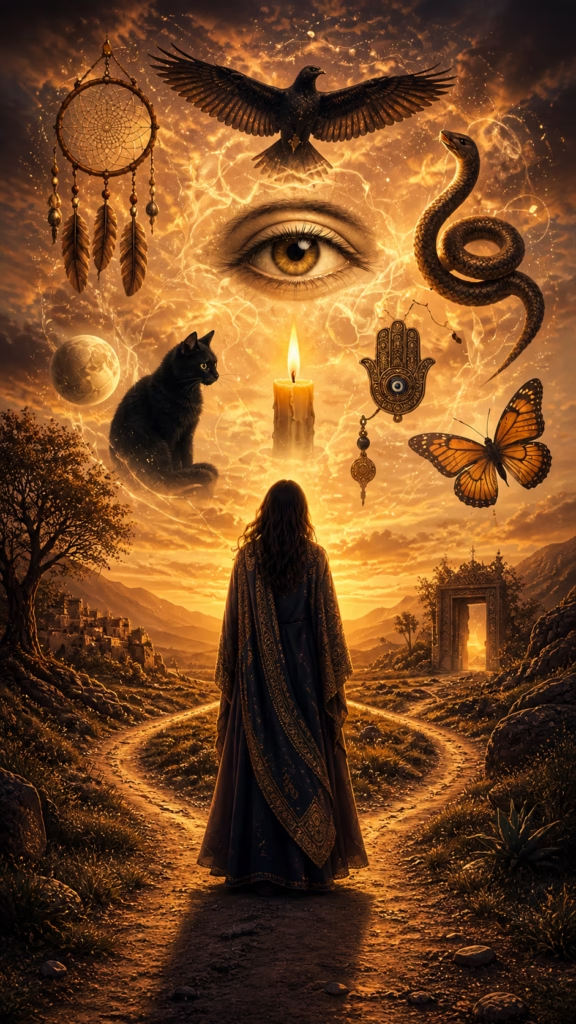
Related Reading: Omens, Signs, and Symbolic Messages
Explore more Arcanologie.me guides about omens, spiritual signs, symbolic events, animal messages, and mysterious patterns that invite deeper reflection.
Spiritual Meaning of Snow
Discover how snow can symbolize peace, renewal, purity, stillness, and patient transformation.
Left Eye Twitching Meaning
Explore left eye twitching through practical causes, cultural beliefs, and spiritual omen interpretations.
Dead Ladybug Meaning
Learn how a dead ladybug may be read as a symbolic message about endings, luck, release, and renewal.
Wasp Nests at Home
Reflect on the hidden spiritual message of wasp nests, boundaries, protection, warning signs, and household energy.
Dead Bees in the House
Explore what dead bees in the house may symbolize, including work, community, exhaustion, loss, and transformation.
Spiritual Meaning of Spilling a Drink
Understand spilling a drink as a symbolic moment connected to release, emotion, disruption, and possible omen traditions.
FAQ
What is the most common omen?
The evil eye is one of the most common omens in Moroccan and Arab culture. Globally, birds, dreams, black cats, repeated numbers, and unusual animal behavior are also common.
Are omens good or bad?
Omens can be interpreted as good, bad, or neutral. Their meaning depends on culture, context, timing, and the person interpreting them.
Is a dream always an omen?
No. In Islamic tradition, dreams may be glad tidings, distressing dreams, or reflections of one’s own thoughts. Not every dream carries spiritual meaning.
What does the evil eye mean?
The evil eye is a belief that envy or harmful attention can bring misfortune. In Morocco, people often use prayer, protective words, or symbols like the khamsa for protection.
How should I respond to a bad omen?
Stay calm, check natural explanations, avoid fear, and use grounding practices. In Islamic contexts, prayer and seeking protection from Allah are preferred responses.
Conclusion
Common omens are best understood as symbolic signs shaped by culture, belief, and personal experience. Birds, dreams, repeated numbers, the evil eye, animals, and candle flames may carry meaning, but they should not create fear. A wise reader studies the sign, respects tradition, and keeps a clear heart.
Sources
- Britannica, “Omen” (Encyclopedia Britannica)
- Britannica, “Augury” (Encyclopedia Britannica)
- Sahih Muslim 2263a, “The Book of Dreams” (sunnah.com)
- Sahih al-Bukhari 6986, “Interpretation of Dreams” (sunnah.com)
- Morocco World News, “The Cultural Representation of the Evil Eye in Morocco” (Morocco World News)
- Britannica, “Jinni” (Encyclopedia Britannica)
- Hamsa cultural overview (Wikipédia)